What is Vitamin D?
Vitamin D is technically a hormone rather than a vitamin. Your skin produces it when exposed to UVB sunlight, and you can also get smaller amounts from food (oily fish, egg yolks, fortified products) or supplements. The liver and kidneys then convert it into its active form, which acts on receptors found in tissues all over the body.
It's best known for regulating calcium and bone health, but vitamin D receptors are present in the ovaries, testes, uterus, placenta, and pituitary — which is why it's relevant in fertility care.
Blood levels are measured as 25-hydroxyvitamin D, usually in nmol/L. For LCRH fertility patients, we consider:
Deficient: below 25 nmol/L
Insufficient: 25–50 nmol/L
Sufficient (for fertility): above 75 – 150 nmol/L
Why might it matter for fertility?
The evidence here is suggestive rather than conclusive, but several associations keep showing up in the research:
Ovulation and cycle regularity. Deficiency has been linked to PCOS and ovulatory dysfunction. Supplementation in deficient women with PCOS sometimes improves cycle regularity and insulin sensitivity.
Egg quality and IVF outcomes. Some studies show higher clinical pregnancy and live birth rates in women with sufficient vitamin D undergoing IVF, though other studies find no effect. The picture isn't fully settled.
Endometrial receptivity. Vitamin D appears to influence the uterine lining and immune environment around implantation.
Sperm parameters. In men, deficiency has been associated with lower sperm motility and morphology, and supplementation may help when baseline levels are low.
Miscarriage and pregnancy complications. Low levels are associated with higher rates of miscarriage, pre-eclampsia, gestational diabetes, and preterm birth.
Conditions that affect fertility. Endometriosis and PCOS both show associations with low vitamin D.
What are LCRH’s management options?
In the UK, where sunlight is limited from October to March, the NHS recommends everyone consider a daily supplement of 10 micrograms (400 IU) during autumn and winter.
LCRH advises our patients to test their level and supplement to bring it into the sufficient range — typical additional doses range from 1,000 to 4,000 IU daily depending on the individual. Higher loading doses sometimes prescribed for deficiency.
Vitamin D is fat-soluble, so it's best taken with a meal containing some fat, and it's possible to take too much (toxicity is rare but real at very high sustained doses).

We are excited to announce that the next LCRH Weekend Walk will be taking place at 10am on Saturday 10th October, 2026 in Beaconsfield. Dogs, friends and family all welcome.
Both integrated and fully independent counselling is a key part of LCRH’s commitment to patient emotional well-being during their fertility journeys.
PMOS was formerly known as PCOS, and was renamed in May this year by a global group of medical, research and patient advocate groups.
Author of ‘The Radically Honest Guide to Fertility Treatment: How to Navigate the Process and Take Back Control’ Dr Louise Goddard-Crawley joined us for a chat.
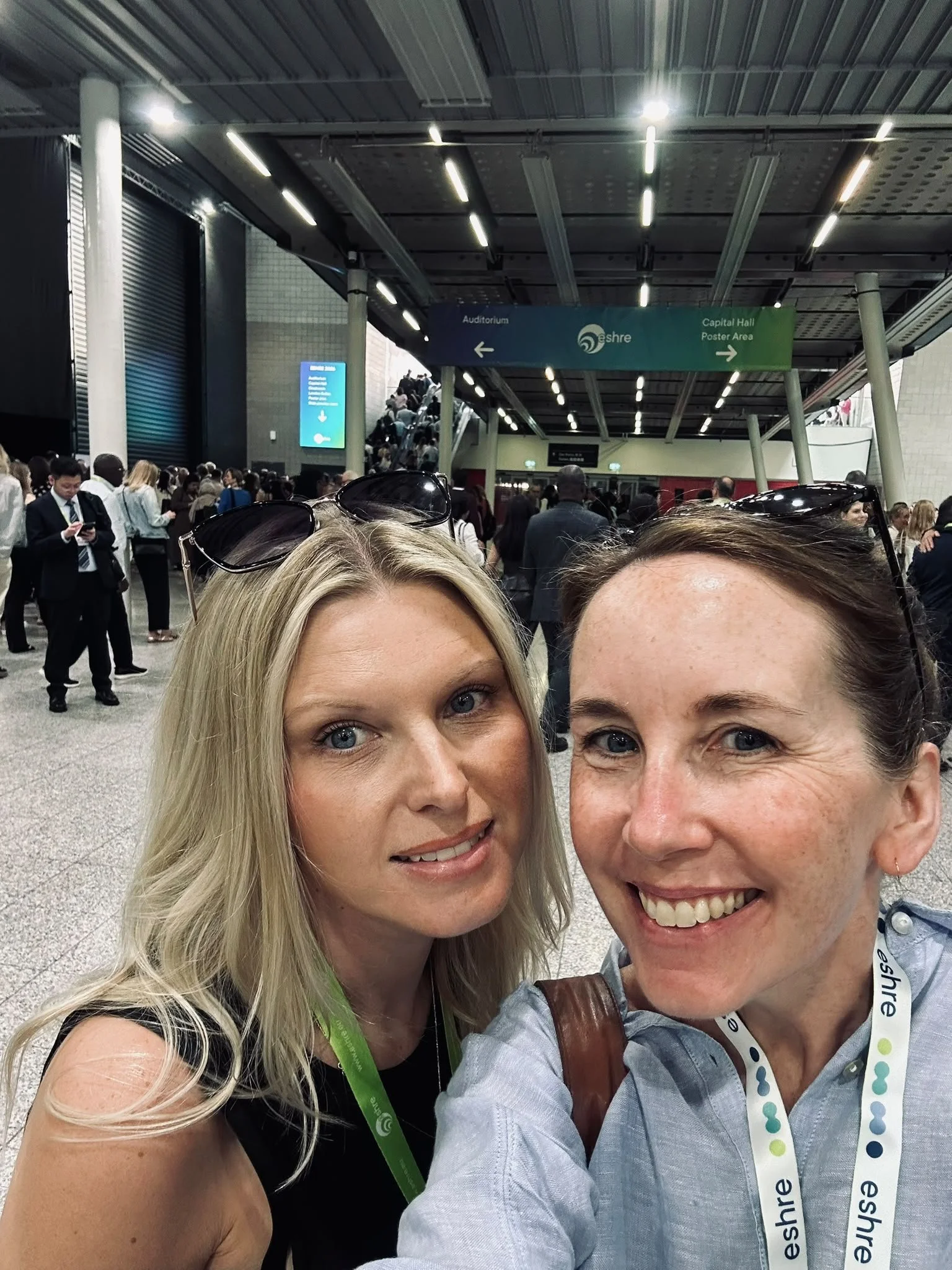
The 42nd Annual Meeting of the ESHRE, the European Society of Human Reproduction and Embryology was held this month in London.
Approximately 15% of men with unexplained infertility have a clinical normal Semen Analysis. It is important to understand the basics before rushing into treatment such as IVF. This could either optimise a single cycle of IVF or reduce the need for assisted reproduction entirely.
For patients looking to stay overnight in London, LCRH has partnered with Mason & Fifth, Primrose Hill.
It's best known for regulating calcium and bone health, but vitamin D receptors are present in the ovaries, testes, uterus, placenta, and pituitary — which is why it's relevant in fertility care.
Learn more about LCRH Weekend Walks. These walks are a friendly and relaxed way to learn more about various aspects of Reproductive Health.
‘I have had every symptom under the sun pointing to that I’m pregnant, and every symptom pointing to not’.
Writer Sita BB Shah shares her Two Week Waiting List.
TSH stands for thyroid-stimulating hormone. It's made by the pituitary gland (a small gland at the base of the brain) and its job is to tell the thyroid gland in your neck how much thyroid hormone to produce. Measuring TSH is the standard blood test to check thyroid function.
Fertility Coach and Reflexologist Carly Garrett has launched ‘HELD’, a series of 16 recordings designed to support throughout an IVF cycle.
A chat with LCRH’s Group Nurse Manager Jane Holman about her career in Reproductive Health.
‘I personally experienced difficulty conceiving my children and have never been entirely sure whether this was related to the intensity of training, my low BMI in adolescence, or other factors.’
Anti-Mullerian Hormone is produced mainly by granulosa cells of growing preantral and small antral follicles, AMH is widely used as a clinical marker of ovarian reserve and expected ovarian response. It modulates early-stage follicle grow and acts as a “gatekeeper” to ensure follicles develop sequentially rather than all at once.
‘Having led teams at several of the leading London clinics, and having been through IVF three times myself, I was at the stage in my career where I wanted to take just one patient on the journey that I would have liked for myself, so I thought, Well, I’m just going to do this for the love of it and see if it grows.’ - Dr Chapman talks to Hannah Pearn.
We have partnered with Wool and the Gang for a second year to offer LCRH patients a 20% discount at the Wool and the Gang Website. We believe that the rhythmic and productive qualities of knitting can be a helpful support in reducing some of the ‘noise’ during a fertility journey.