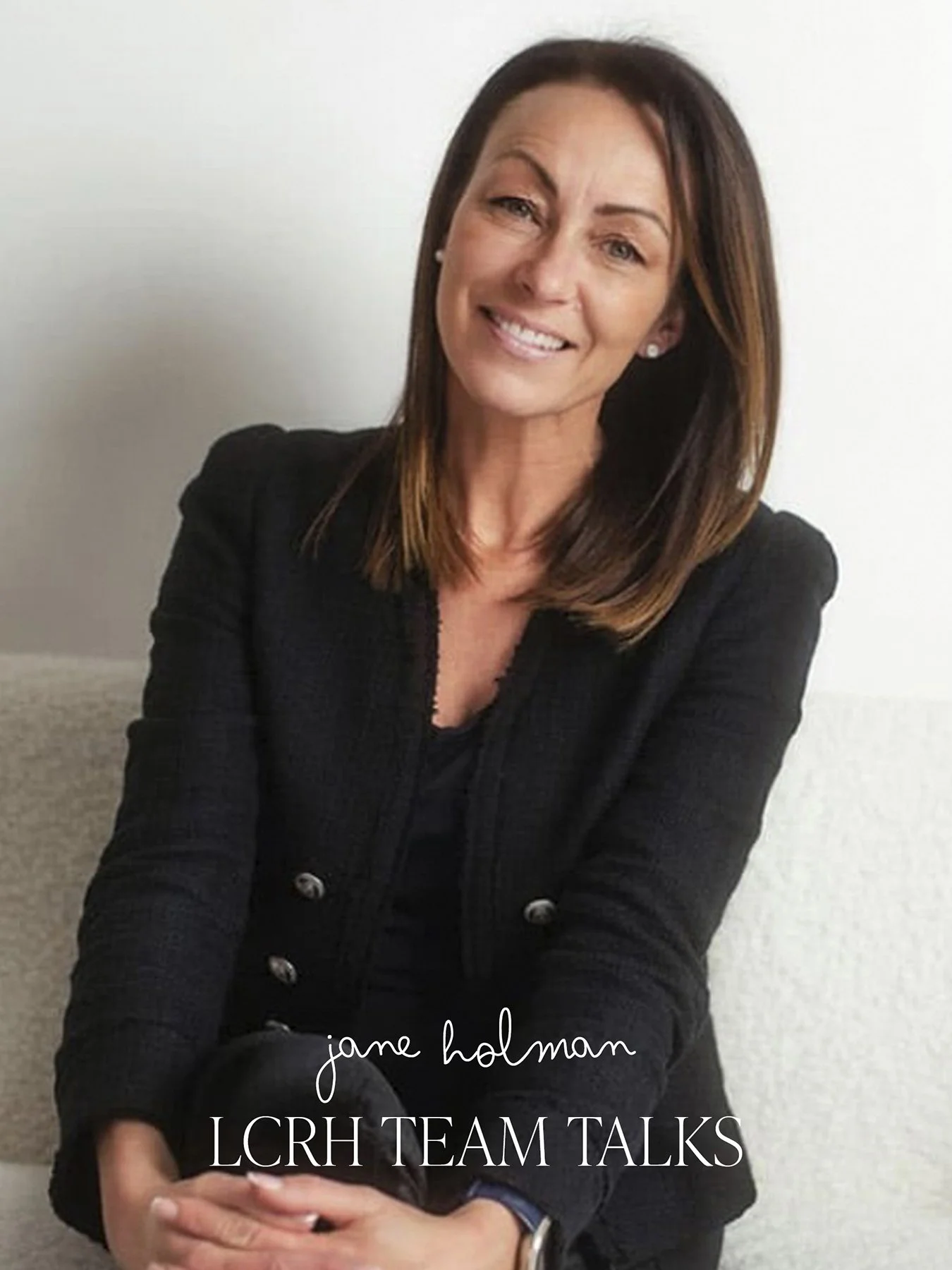
A Chat with Jane Holman
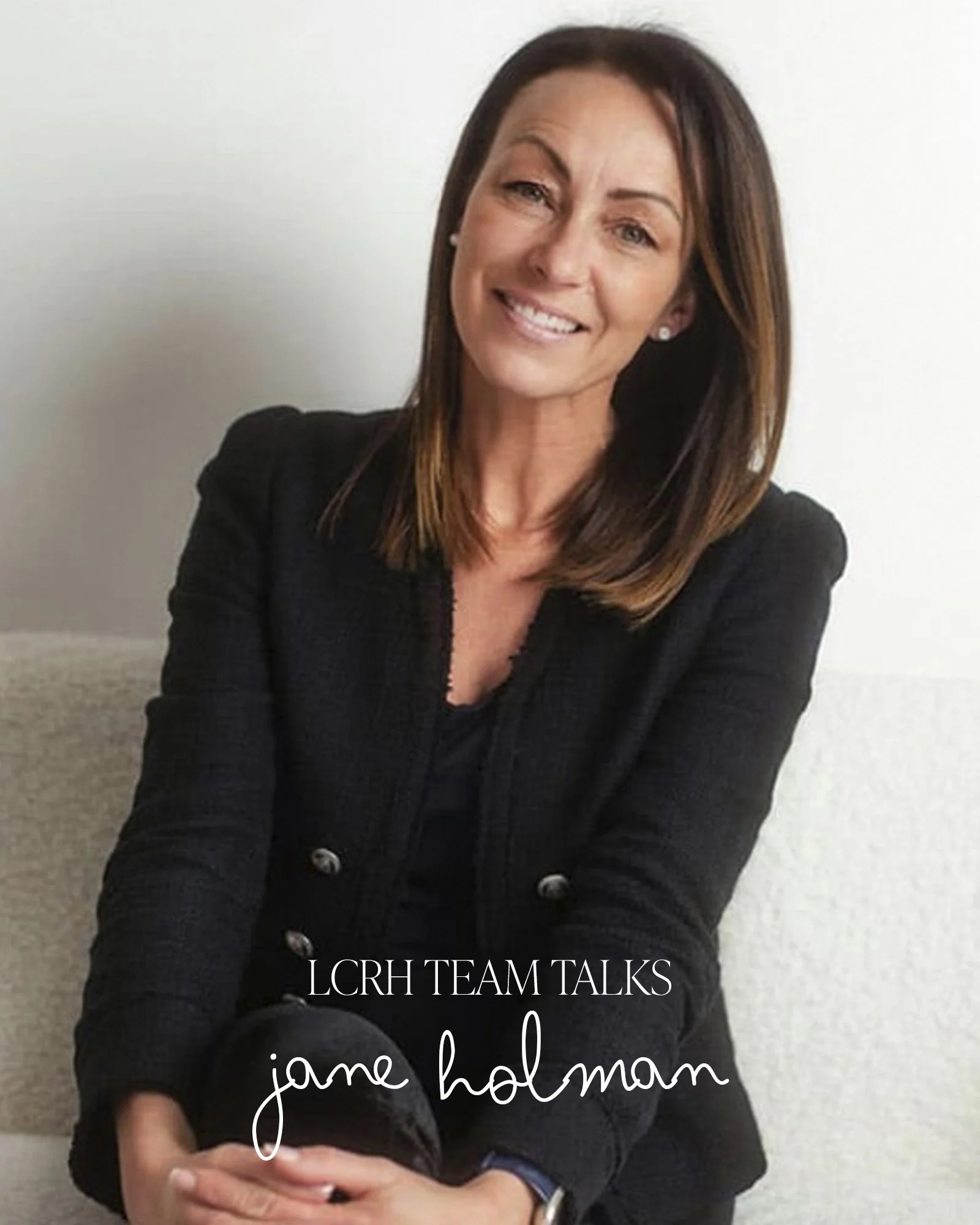
LCRH Team Talks
A Chat with Jane Holman
Jane Holman is the LCRH Group Nurse Manager, Specialist Fertility Nurse & Sonographer
How did you find yourself at LCRH?
Lynne and I have worked together previously, and I really admire the way she works, I like her approach and manner with patients, which is quite unique and something you don't get every day. I've always been interested in the evolving, developing reproductive medicine world, and keeping my hand on research, attending conferences, making new connections. Lynne and I went separate ways initially due to work commitments, but as time went on our friendship grew and we kept in touch, and here we are, working together at LCRH however many years later! I am so proud of what she's achieved in that period of time, she has worked tirelessly to provide this unique hub of support for patients offering exceptional care and building her team around her.
Were you the first member of the team at LCRH?
I think was! I went to see her at home, because again, we were friends, and I think I took the dogs and we just went for a walk and she said, “Oooh, I've got a proposal to put to you! How do you fancy, if I start on my own, maybe working together, you joining me and coming on board?” And I just loved the whole concept from the start. Lynne’s idea sounded so exciting and something that was unique and really appealed to me personally because I'd been working in different IVF clinics for quite some time in more of a corporate setup where it is quite hard to make your mark and make care very individualised. I loved the whole idea of LCRH, what a fabulous opportunity, you know; starting out by having a handful of patients, seeing where it would go. Seeing something evolve over time. It is something that we both still feel so passionate about.
LCRH has a very individualised approach
I think the whole time I've worked with Lynne, there's never been the focus of targets, which I think is one of the biggest issues when you're working in IVF, because if you're working for a bigger organization, it's more about number crunching. You’ve got to get this number of cycles through. So with LCRH the focus is completely on patients and patient care and delivering, what we feel is an excellent service rather than, ‘we've got to get 20 cycles through the clinic this month’. To have that taken away, to have that removed from you, means that you know that you're absolutely providing your best care for patients, which is lovely and refreshing.
Tell me more about your career before LCRH
Okay! So, I moved into women's health because I liked the idea of working with people that were generally well, but who needed a little bit of support in one way or another. I did my training at University College and the Middlesex Hospitals in Central London, then I moved over to Kings College Hospital. As far as fertility and reproductive health goes, Kings were at the forefront at that time with IVF, although I didn't go straight into the IVF unit, I went into family planning, which gave me quite extensive experience in working with well women and early pregnancies. We also had quite a few ladies that came through that had been through the IVF route, and that generated in me an interest in wanting to know more about reproductive medicine. I had the opportunity to move into the IVF unit, which was run at the time by one of the pioneers of IVF, Dr. John Parsons alongside the first Consultant in Embryology Dr Virginia Bolton. John was really at the forefront of advancing reproductive medicine, involved in research, teaching and training, and this was in the days when there were a lot of NHS contracts, and more funding available. I was fortunate, became involved in the research, training and development side and had the opportunity to move rapidly so was managing monitored cycles, as well as patient inseminations. Donor sperm was big in those days because there wasn't as much in the way of advances as there are these days. A patient’s choice was much more limited.
There was a lot of nurse involvement in supporting patients, counselling patients, not just on injections, but during treatments as well. John taught me to scan, and I went through various scanning courses, and then he suggested getting it all approved with the NMC for me to do egg collections and embryo transfers, and that opened a massive door for me. So again, I went through whole training programme and was one of the first three nurses in the country to be able to perform egg collections. This progressed to me having my own theatre list and theatre days.
It was lovely to be able to take that patient through from initial stage right through to the endpoint. And eventually, I was even doing embryo transfers. As far as volume of patients, we were doing probably anything up to about 2,000 cycles a year. It was busy, it was fast paced, and we were working with quite large numbers of patients, a lot of whom were NHS funded, but we did have self-funded patients as well.
Then you went overseas?
Yes. Kings was a teaching hospital, and a lot of doctors would come to the UK from overseas to be trained. John, Virginia, myself and others in the teaching team would then go overseas, providing training to Medics on performing egg collections and the skills required to do so. We went to Nigeria, to India, and to Kuwait. These countries were hugely grateful to have that input from the Western world. We would prep patients, then they'd have them regulated and start the stimulation process, and we'd go in and work with large groups of patients while teaching. Days were long, patient volume was immense, scans were numerous as well as egg collections, culturing embryos and then embryo transfers. John and Ginny and I did this for the first setup and then for subsequent visits, I would go as the lead nurse consultant, and I would do the collections. This really expanded my interest in reproductive medicine, but also in that skill set to be able to offer patients an excellent level of care - you could really connect with patients because you could appreciate when they had those positive tests, and success rates were really good.
I was at Kings probably for about eight years. And I during that time, I also took a year out where I went traveling and worked in Australia for a little bit, just because I was young and I wanted to spread my wings.
What did you do when you came back to England?
My next position was at Chelsea and Westminster Hospital, where I was Nurse Manager within IVF and I was there for about eight years. I supported and helped the Team grow as well as performing Ultrasound and egg collections and then was seconded to Be Gynaecology Nurse Lead as well as IVF for approx. 1 year.
From there, I was approached to project manage setting up a clinic in Tunbridge Wells, my home town, which is now part of the Care Group. And that just appealed to me at the time because I'd had my first son Ben and was working full-time and the reduction in travel was really quite a pull! I’ve always been career focused. I had three months off when Ben was born before returning to work, and when the opportunity came up to work a bit closer to home and also to be involved in not only nurse management, but the project managing setting a clinic up from scratch, it was challenging and exciting too, and I was there for about seven years.
I've got three sons now, so working locally initially was a great help rather than commuting especially as the boys were small, and I needed to be part of their lives too! Following a divorce, and needing to get my career back on track, I then took another position back in London which involved establishing a chain of clinics which became City Fertility (now absorbed by the CRGH group). It was when I was at City that I was approached to do a similar sort of thing for IVI RMA Global, which obviously was another great opportunity. It was a similar sort of role in leading a team and being involved in establishing a new Clinic in the heart of London. From sourcing a building to establishing and working with the embryologist lab team, medical and nursing we had a new clinic and then needed to establish ourselves in the UK raising awareness and building a reputation. I worked there for quite a few years, and that's where I overlapped with Lynne. So, when the opportunity came to work together and to set off on this little journey, without knowing what was going to come of it, it was quite exciting. And yes, we have evolved together, and it's just gone from there.
Since starting your career what changes stand out to you as real landmarks in in the way fertility is approached?
I think ICSI (Intracytoplasmic Sperm Injection) being introduced. This is a technique where we're using sperm with abnormal parameters to be able to help and support patients in achieving a pregnancy using their own gametes, because, prior to that, where the sperm samples were of a poor quality, there was an almost automatic move to use donor sperm.
I think that was a real breakthrough, and to see how that allowed patients to be able to proceed following a different path and have children, which were genetically their own, was just phenomenal. We do very few donor sperm cases now, whereas before, there was a lot of donor insemination used for patients coming through.
I've always felt passionately about taking care of patients, being the patient's advocate as a nurse, and doing what we feel is in their best interests, which obviously is the aim of anybody within the field. Making sure that if there are advances in reproductive medicine or science and technology, that we look at how valuable that is to our patients. Being able to explain that at a level of understanding that they can interpret, making sure the patients are informed and can make informed choices rather than telling patients; ‘this is what you will do’. You know, these patients are so much more educated today with how much information there is out there, and what they know when they come to us.
So, patients have changed too?
I think the whole landscape has changed. Years ago, when I came into this field, patients were quite vulnerable and they were very much, "You tell me and I'll do whatever I'm told." These days, patients come to us much more educated. They ask questions, and it's lovely to be able to give them the evidence in what we believe at LCRH is right for them. We truly believe that what we provide for our patients is the best care, and we really believe we can help patients that come to us that have previously had a difficult journey.
I suppose I feel quite privileged at the moment because I have calls with patients right at the very early stage. And I think that's valuable for patients because they come to us, sometimes, knowing an awful lot and having had numerous previous cycles and sometimes not having much information, and the feeling that it's an absolute minefield. Just be able to reach out and say, “Here's the information, there's no pressure, you don't have to stay with us, but this is how we can support you moving forwards.” I suppose for me, it feels as if we're making such a difference to that patient journey, and I think if I were to be a patient, I would be hugely appreciative of it.
That LCRH Difference!
Yes, I think that's where Lynne and Jo stand out from the others, because they can relate, because they've been there themselves and there’s an empathy there. To be able to deliver evidence-based medicine that we know makes a difference, I think, is our USP, and I think it makes us stand out from a lot of other clinics.
When I've spoken to patients, when they've wanted to talk about their experiences and share it as part of what we're doing on the website, one of the things people talk about is the really special things that stood out beyond the treatment they received, like when people are worried about their injections or they call in the middle of the night because they're worrying about something - it’s those things that they don't expect to ever have the support on also stand out so much.
You love what you do!
I do love what I do. Lynne loves what she does too. I think the team generally feels very passionately about how we take care of our patients. Every now and again, when you're having a day where you're feeling exhausted and you see patient photos of their lovely little babies’ pop into the team chat it's so nice. I feel blessed that I enjoy what I do because there's so many people that go to work and don't.
What about egg freezing, and the empowerment side of what you do with younger women?
Yes, before, people discovered at the point of trying to have a child if it was going to be difficult or if it was going to be easy for them. Whereas now we have this whole area of time where we can be thinking about egg freezing as a younger woman and thinking about fertility in the future. A woman can start thinking and taking control of her own reproductive health at quite a young age. I think it's amazing for all younger, and professional women, when quite often they are putting a family on a back burner or may not be a position to even consider a family right now, but don't want to lose the opportunity in the future. I think it's fabulous.
I tend to manage all the egg freezers with Lynne, we have an initial call, provide information, statistics and and initial assessment. Following this we look at cycle dates, commitment to the process and I then look at planning the cycle, consents and screening required. This way it streamlines the process and makes it straightforward for them.
I had a call with one patient yesterday. She's already got a timeline. She's had an AMH. She knows she's going to start with her next period, she well informed knows all about it, she's clear and has direction. So, you know, I think it's a lovely thing to be able to offer patients and raise awareness. We have had some patients that have come through that have thawed their eggs and have then been successful with IVF, so it's really nice as well to know that it actually works, what we're saying, does work. We've got a few patients pregnant at the moment in this way.
LCRH works with a lot of athletes, I know advocacy for reproductive health among young female athletes is important to Lynne.
I think it's about trying to raise awareness, to say, you know, it can be relatively straightforward to consider social egg freezing. Getting patients at the right sort of age is key and optimum to getting a good outcome. So, advising on lifestyle, what is the best time to be able to potentially come through and consider this option all those sorts of things I think are key. Sometimes patients are taking medication that isn't favourable for going through this process, so it's about making sure patients are clear what is what is good and what is not so good, prior to embarking on this process.
Tell me about a highlight in your day?
The pregnancy scans are always a highlight because we fight over those! We all get to know the patients, and it is the icing on the cake to know we've taken a patient through that journey; we’ve got a positive test, a fetal heart and we've got a good result!
Christmas is always a flurry of communication from patients, which is so lovely because you've got pictures, you've got baby's first Christmas photos from patients. It really makes me think about how much of a difference it makes, not only to do this job, but to do this job well. It is totally life changing!